
Under the terrace, the Trajineras come through an arch tunnel. These flat-bottomed wooden boats are hand-painted in eye-catching assorted colours and float along over an intricate, atmospheric canal system. Each Trajinera has an exotic name, Norma, Rosa, Guido, Gordis, Gracil, Flaquita, H, etc.
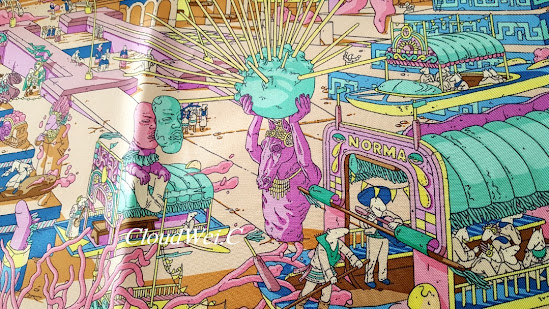
Norma is the largest Trajinera in the area, with one Mexican mariachi acoustic guitar player wearing a Sombrero hat performing on the boat. Trajinero, the operator of the Trajinera, is slowly navigating and leaving the dock of the city’s iconic sculpture. The stone sculpture Horse is lifting the crowned sea urchin over its head.
The crowned sea urchin is also known as the long-spined sea urchin. This species is ecologically important because it consumes microalgae, makes room for the expansion of existing coral colonies, and helps the next generation of corals grow. The coral colonies protect coastal areas by reducing the power of waves and tropical storms from the Atlantic and Pacific oceans hitting the coastlines. Also, offering natural habitats and shelters for many marine organisms.
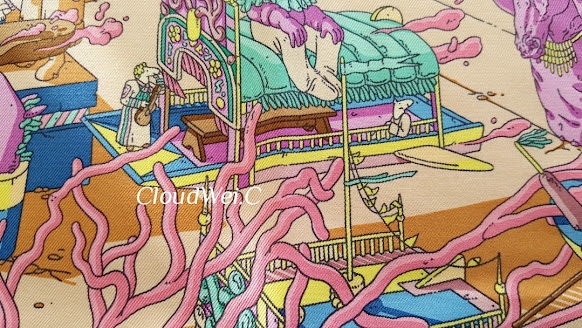
Rosa the Trajinera is parking at the dock where the folk dancers of Danza de Los Viejitos are performing by stomping their feet. The long colourful pieces drape loosely around their straw hats. They wear a long, bright-coloured shawl-like blanket Serape. The wooden soles of their sandals make tapping rhythm sounds throughout their dance.
Between the arch tunnel and the H platform, three folk dancers of Matlachines present with their colourful outfits. Their chicken-feather headdresses are dyed to match the colours of the Mexican flag.
On the other side of the canal, the Merida ribbon dancers (El Baile de las Cintas) are moving in a circle around a pole’s base. Each participant is holding on to a brightly coloured ribbon in the “H” hall under the suspension bridge.
A pair of Jarabe Tapatio dancers tap their feet in the Mariachi band’s background on the floating garden stage. The aim of the Mexican national dance showcases the woman’s broad, colourfully decorated skirt as it flows. It also highlights the man’s flashy “kick and stamp” moves with his pant legs lined with silver buttons.
The Deer Dance, or La Danza del Venado, is a native Yaqui Dance from the northern Mexican state of Sonora.
A thrilling ceremony begins when drumming starts in the courtyard. The ritual consists of a dance and the climbing of a 30-meter pole. Four of the five Minos are attached to the top of the pole individually by a rope. Launch themselves at the top, gently twirl, spin, and descend to the ground. One lucky member remains at the top, dancing, playing a flute and drum. Los Voladores de Papantla, the flyman dance, was recognised as an Intangible Cultural Heritage (ICH) by UNESCO in 2009.
Night falls in the sky, the moon begins to rise, as paper-mâché bursts out and falls from the Piñatas. The hovering shuttles and flying boats are leaving the fascinating imaginary “H” world.

 Musee de CloudWei
Leave a comment