
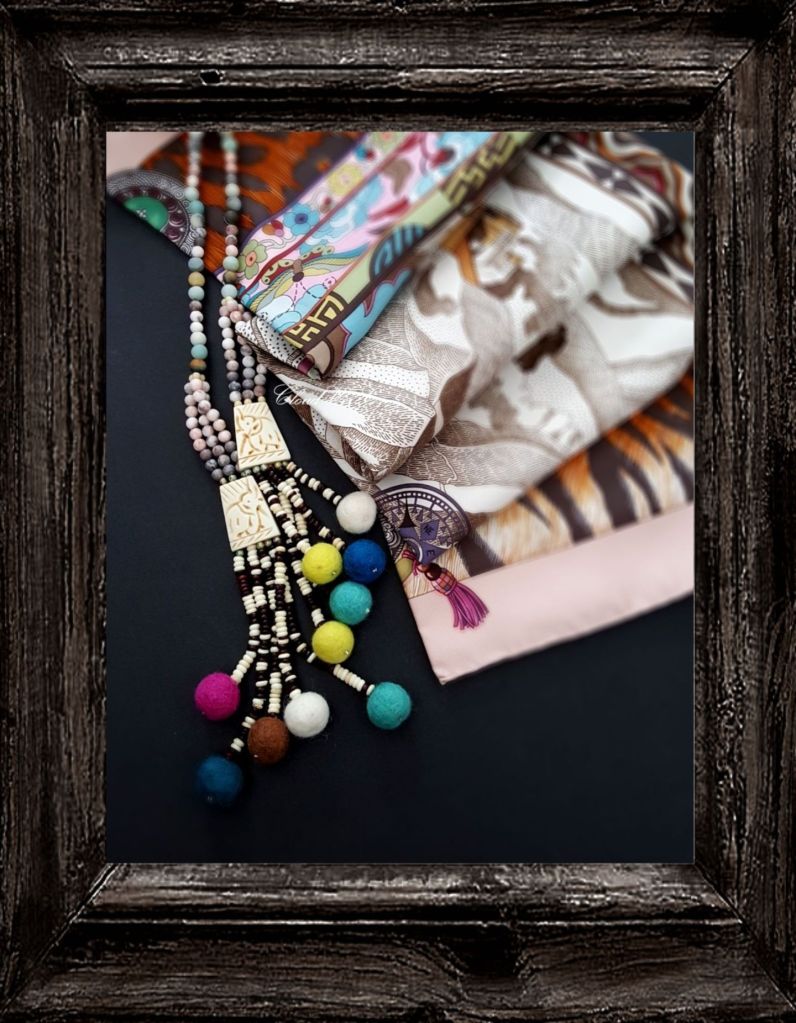
Hermès Scarf La Femme aux Semelles de Vent
Year of Issue: 2009
Artist: Aline Honoré
Jewellery Artist: CloudWei Cheung
In-depth Research Article by CloudWei Cheung
The Scarf design story from Hermès: “The carré borrows its title from the epithet “The man with wind for his soles” that Verlaine has used of his friend, the travelling poet Rimbaud. It pays homage to Alexandra David-Neel (1868-1969), the explorer, versed in knowledge, who studied oriental philosophies and covered thousands of kilometres crossing Central Asia and the Far East. Like the rugs and clothing of these regions, the carre is bordered with fur bands, printed on the silk, and embroidered braids, mixing ethnic, geometric, or floral patterns, interspersed with pieces of gold-work, charms, and earrings of silver, coral, and turquoise.”

Hermès Scarf Prières au Vent
Year of Issues: 1996
Artist: Dimitri Rybaltchenko
Jewellery Artist: CloudWei Cheung
The Scarf design story from Hermès: Buddhist pilgrims armed with the prayer wheel (visible at the four corners of the square) parade around the stupa, a funerary monument where the relics of the saint sleep and whose complex architecture, dominated by the hemisphere, symbolises the elements. Up there, in the clouds, the eagles turn too, soaring like truth above the god-pointed peaks and the monasteries from which a silent murmur of meditation and asceticism emanates,

Hermès Scarf La danse du cheval Marwari
Year of Issue: 2008
Artist: Annie Faivre
Jewellery Artist: CloudWei Cheung
The Scarf design story from Hermès: “The Marwari is the horse of the Rajputs, the first Indo-Aryans. Not only does this caste have historic origins, it also boasts a legendary genealogy according to which the Rajput kings were born of the sun and their horses made of sunbeams. Prince Siddharta, the future Buddha, left his palace on a shimmering white steed. All this symbolism has made the Rajput riders and their Marwaris famous worldwide. In the centre of the scarf La Danse du Cheval Marwari, stands a beautiful steed. Elegant with graceful, thin legs, the horse’s most salient feature is his ears, the tips of which are turned towards one another in the shape of a crown. The other horses all look at him, waiting for their turn to execute a dressage. They are all sumptuously adorned in jewels and brocades, as precious as those of their riders. This parity signifies the intense relationship between master and animal. Marwaris still take centre stage in parades, bearing finely worked saddles and headpieces, and breastplates adorned with gold necklaces and precious stones.”

Hermès Scarf Tapis de Selle
Year of Issue: 2020
Artist: Annie Faivre
Jewellery Artist: CloudWei Cheung
The Scarf design story from Hermès: “Inspired by a visit to the Émile Hermès collection, Annie Faivre designed these richly adorned ceremonial saddle pads on which nature evokes imaginary and dreamlike lands. The artist freely interprets the conventions of flowers, rose windows, palmettes and branches in a celebration of the art of weaving and its traditional motifs. The croupelin, a rounded saddlecloth placed on the horse’s lower back for special occasions, features in the corners of this sumptuous scarf.“
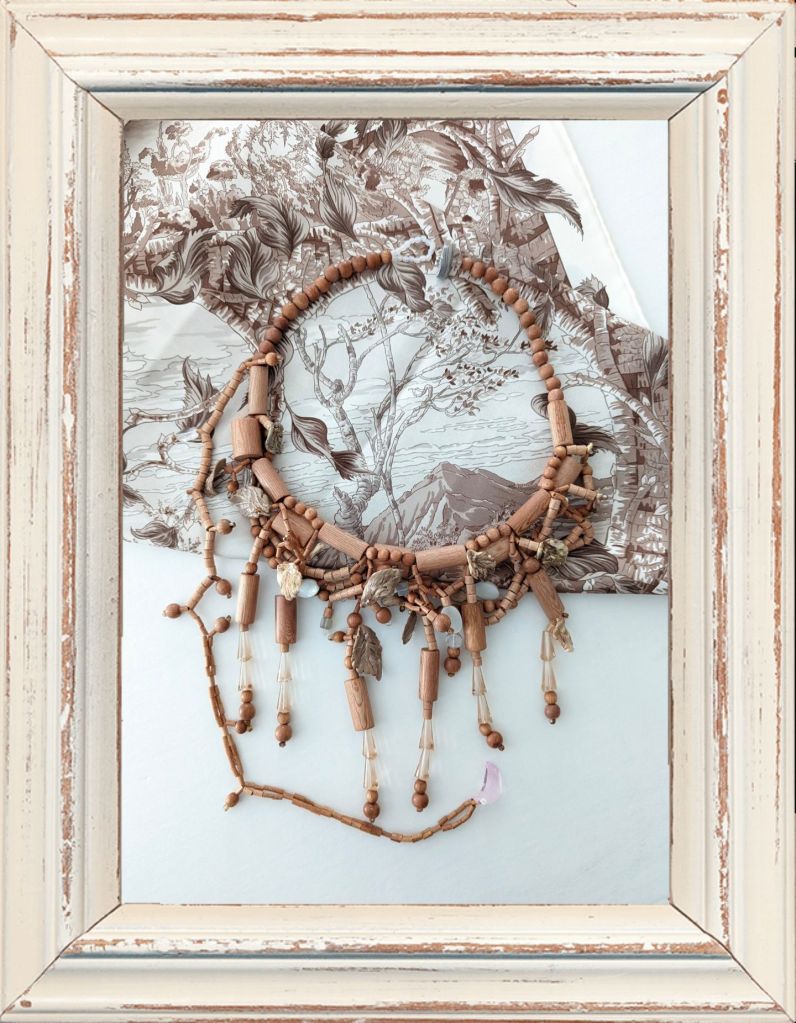
Hermès Scarf Fantaisie Pittoresque
Year of Issue: 2008
Artist: Françoise Houtin
Jewellery Artist: CloudWei Cheung
The Scarf design story from Hermès:
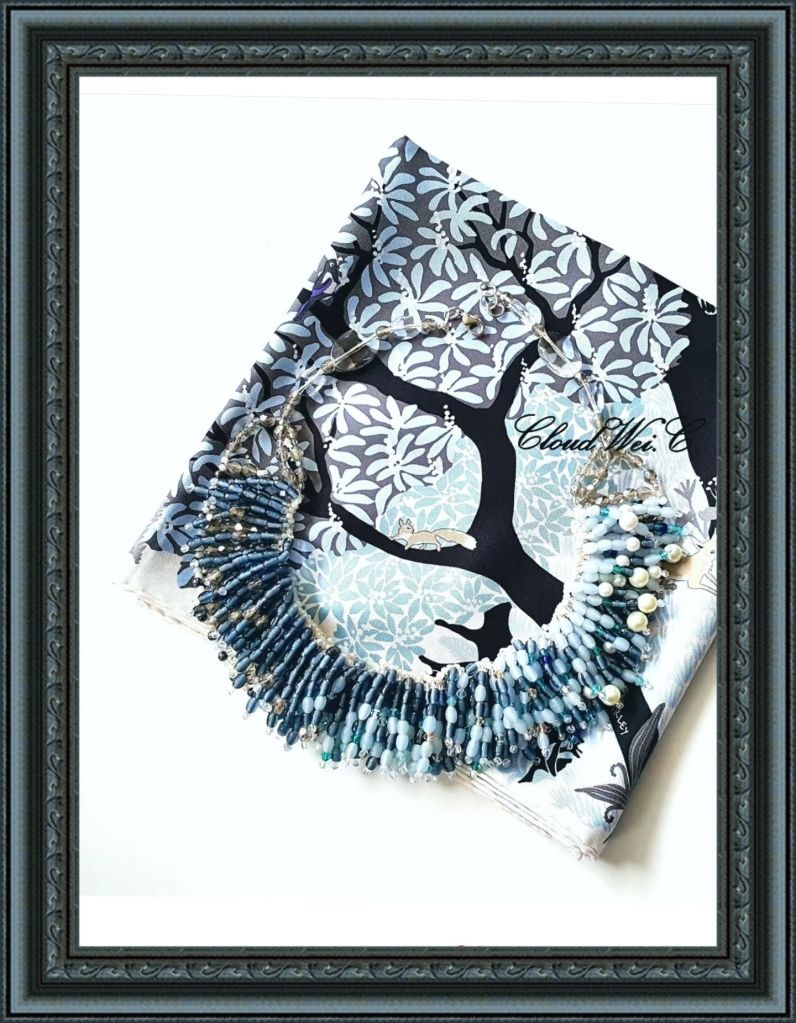
Hermès Scarf Dans un Jardin Anglais
Year of Issue: 2015
Artist: Alice Shirley
Jewellery Artist: CloudWei Cheung
The Scarf design story from Hermès: “What finer invitation to wander at leisure, than an English country garden? Designed by Nature herself, recreating the happy accidents of the natural scene, its unimagined alliances and improvised paths… Gardens à l’anglaise first made their appearance in France in the 18th century, ushering in a new sense of freedom – a space where nature and nurture could meet and mingle, threaded with flower-lined paths winding between shrubberies, clusters of trees, plants and rocks, leading to a striking viewpoint, a water feature, a bridge, a ruin, a dead tree… A place for surprises and dreams; a place of unending fascination. Alice Shirley’s design perfectly expresses the bucolic charm of every English garden: a rustic scene peopled with deer and birds. A zig-zag path leads to the top of a flight of mossy steps, and a flowery arch – the gate of Paradise, perhaps! Where better to roam at will, sampling fresh delights, taking time to dream… Alice Shirley’s English garden embodies the true art of the French flâneur.”
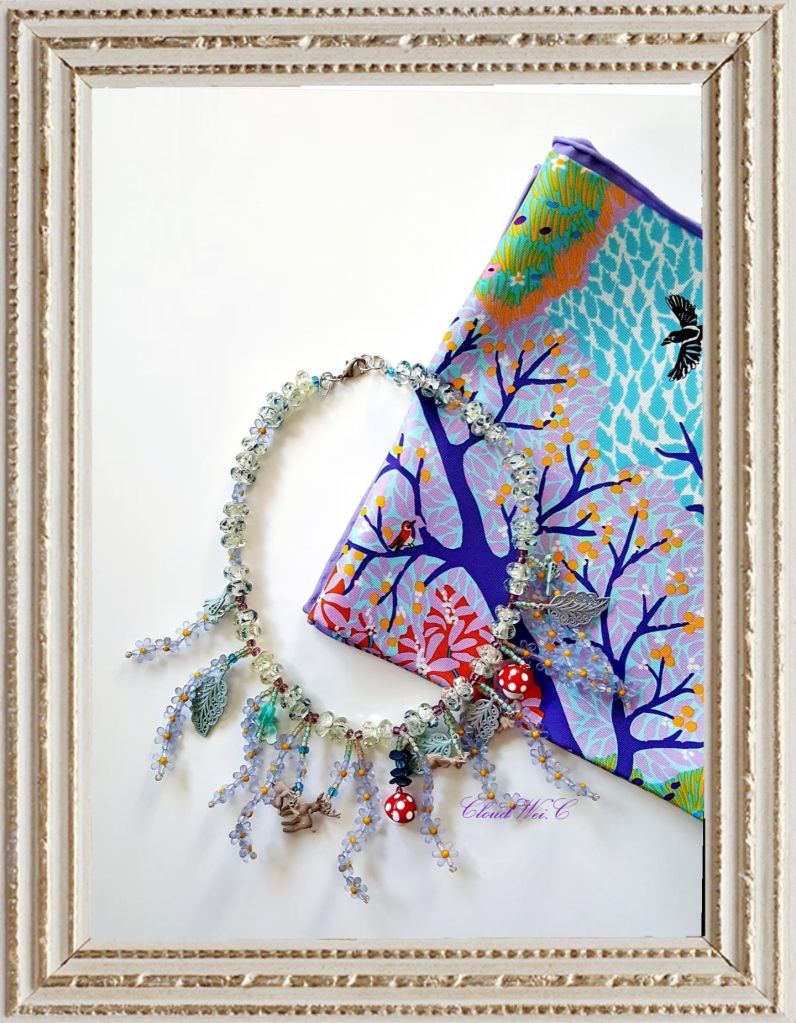
Hermès Scarf Dans un Jardin Anglais
Year of Issue: 2015
Artist: Alice Shirley
Jewellery Artist: CloudWei Cheung
The Scarf design story from Hermès: What finer invitation to wander at leisure, than an English country garden? Designed by Nature herself, recreating the happy accidents of the natural scene, its unimagined alliances and improvised paths… Gardens à l’anglaise first made their appearance in France in the 18th century, ushering in a new sense of freedom – a space where nature and nurture could meet and mingle, threaded with flower-lined paths winding between shrubberies, clusters of trees, plants and rocks, leading to a striking viewpoint, a water feature, a bridge, a ruin, a dead tree… A place for surprises and dreams; a place of unending fascination. Alice Shirley’s design perfectly expresses the bucolic charm of every English garden: a rustic scene peopled with deer and birds. A zig-zag path leads to the top of a flight of mossy steps, and a flowery arch – the gate of Paradise, perhaps! Where better to roam at will, sampling fresh delights, taking time to dream… Alice Shirley’s English garden embodies the true art of the French flâneur.

Hermès Scarf Le Jardin de Leïla
Year of Issue: 2014
Artist: Françoise Houtin
Jewellery Artist: CloudWei Cheung
In-depth Research Article by CloudWei Cheung
The Scarf design story from Hermès: “Gardens inhabit the imagination of landscape gardener, engraver and illustrator François Houtin for whom the plant world is an endless source of inspiration. Some years ago he composed a dreamy personal interpretation of Leïla Menchari’s Mediterranean garden. Menchari discovered this garden in her native Tunisia at the age of 10 and it has inspired decades of creations since. She describes “creepers hugging enormous trees”, “vegetation inhabited by the rustle of bamboo in the breeze”, “the surrealism of this nature” and “the image of paradise”. A few seasons back this scarf was decorated with embroidery, stamps of multicoloured flowers, blooming corollas and ornamental foliage. These colourful motifs are reproduced here through the magic of block printing.”
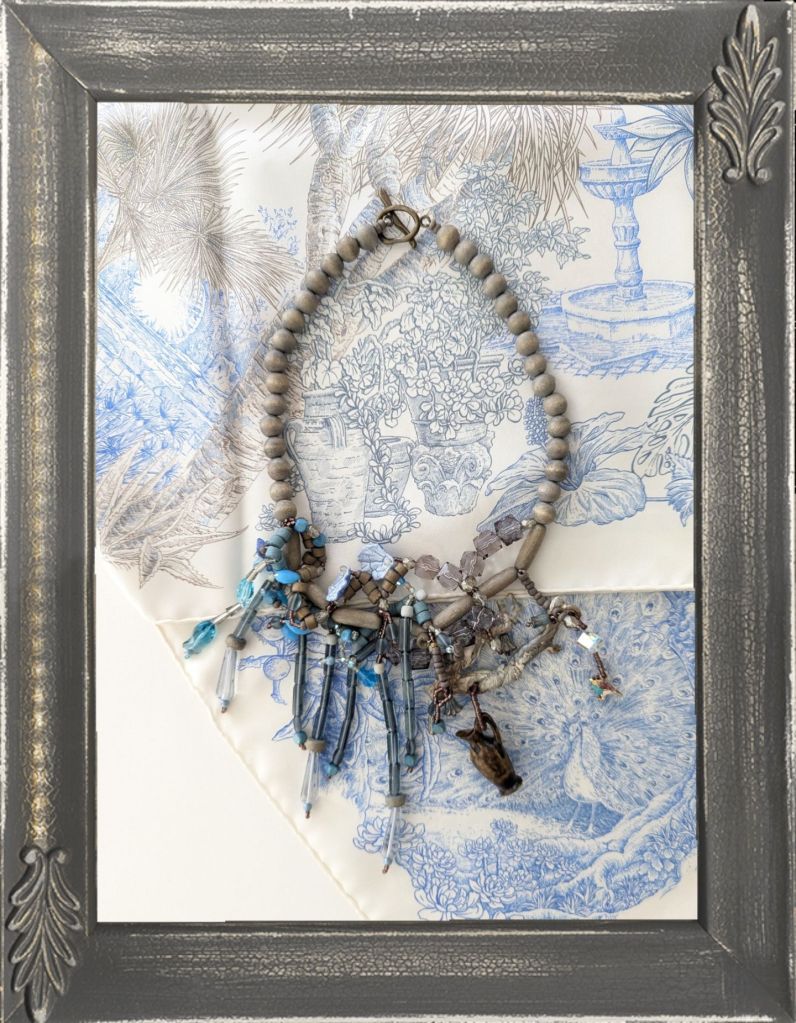
Hermès Scarf Le Jardin de Leïla
Year of Issue: 2014
Artist: Françoise Houtin
Jewellery Artist: CloudWei Cheung
In-depth Research Article by CloudWei Cheung
The Scarf design story from Hermès: “Gardens inhabit the imagination of landscape gardener, engraver and illustrator François Houtin for whom the plant world is an endless source of inspiration. Some years ago he composed a dreamy personal interpretation of Leïla Menchari’s Mediterranean garden. Menchari discovered this garden in her native Tunisia at the age of 10 and it has inspired decades of creations since. She describes “creepers hugging enormous trees”, “vegetation inhabited by the rustle of bamboo in the breeze”, “the surrealism of this nature” and “the image of paradise”. A few seasons back this scarf was decorated with embroidery, stamps of multicoloured flowers, blooming corollas and ornamental foliage. These colourful motifs are reproduced here through the magic of block printing.”
 Musee de CloudWei